
Interactive clinical cases that bring theory, decision-making, and practice closer together.
Clinical Simulation | Live 360
With human standardized patients, the student runs the encounter from start to finish: asks questions, examines, forms hypotheses, and decides on management in a safe environment.
How students practice.
The encounter follows the order of real practice: listen, examine, investigate, and decide. At each step the student records their choice, and faculty can see the path of the reasoning, not just the outcome.

History taking
The student formulates their own questions and the patient answers in recorded video.
Physical examination
Vital signs, auscultation, region-by-region examination, and real findings.
Diagnostic workup
Ordering labs and imaging, and interpreting the results.
Management
The final decision is recorded and becomes material for discussion and assessment.

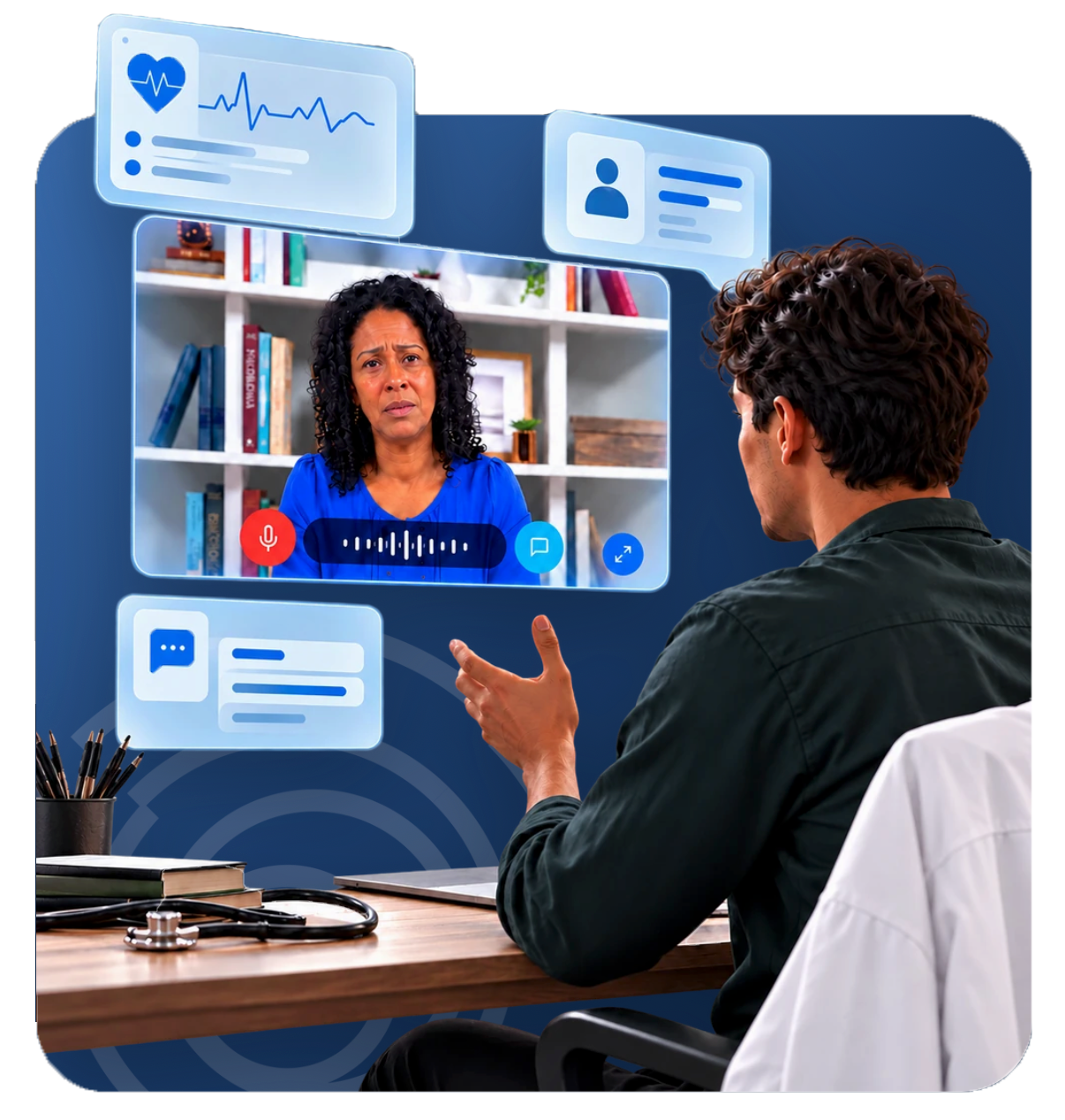
Live 360: the encounter happens by voice.
Students talk with a virtual patient and are assessed during the interaction, with immediate feedback. There is nothing to tick: they ask in their own way and the encounter goes wherever their approach takes it.
Students in a real conversation:
Students talk by voice with a virtual patient, are assessed during the interaction, and get immediate feedback on their performance.
Faculty create their own case:
Faculty create their own patient: they choose the profile, clinical context, emotions, behavior, and even the criteria they want to assess.
Clear criteria:
Assessment uses the criteria set out in the 2025 DCN or custom criteria defined by faculty.
Data for programmatic assessment:
Each student's performance is recorded by competency, cohort, and term, and program leaders track progress with that data.
The feedback points to the next step, not a list of mistakes.
How institutions use it
The same case library serves four different moments in the program. Program leaders choose where practice enters the routine without creating a new course or reshuffling credit hours.
In-class discussion
Faculty run the case with the class and discuss the decisions in real time.
Guided study
Cases assigned by topic for practice outside class hours.
Supplementary practice
Targeted reinforcement for students or cohorts with identified gaps.
Exam review
Hands-on preparation before exams, OSCEs, and clerkships.
Faculty in charge, with less friction.
Cases arrive ready to run, but the teaching stays in the instructor's hands: choosing, contextualizing, discussing, and assessing. The platform removes the operational load and gives back time for clinical discussion.
Seen in practice.
A complete case inside the platform, from the patient's first reported symptom to the management decision the student records.
Frequently asked questions
Are the patients computer-generated?
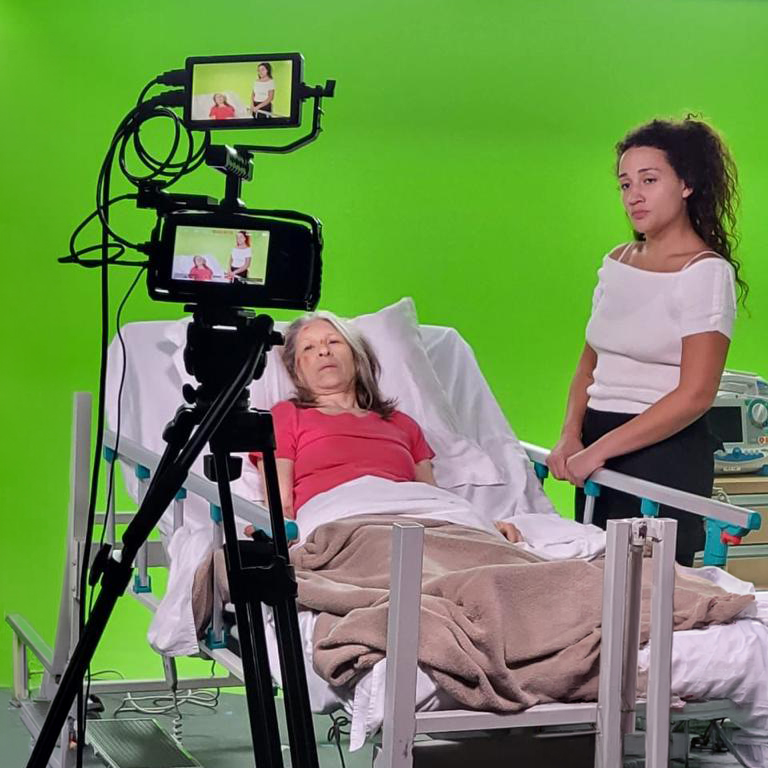
In the platform's clinical cases, no: they are human standardized patients recorded on video with real people, which preserves communication, expression, and clinical listening. In Live 360, students talk by voice with a virtual patient, built from a case defined by faculty.
What is Live 360?
It is Paciente360's voice-based clinical conversation. Faculty create the case, students run the encounter by talking with a virtual patient, and the feedback points to the next step based on the DCN.
Can the teacher create the case themselves?
Yes. Faculty define the history, the complaint, what the patient volunteers and what they only reveal when asked, plus their life context and way of responding.
Does simulation replace in-person practice?
No, and that is not what we propose. Simulation prepares students to arrive at in-person care with better-trained reasoning and less anxiety in front of their first patient. Outpatient clinics, hospitals, and preceptorship remain irreplaceable.
How many cases are there and which areas do they cover?
More than 350 active clinical cases, with the greatest depth in medicine and growing coverage in nursing and the preclinical years. The full list by area and specialty is sent during the 360 Diagnostic, along with a recommendation of which cases to run first in your program.
Does it work for Nursing?
Yes. There are cases developed specifically for nursing, built around the competencies and scope of practice of the profession. These are not medicine cases relabeled.
See a case running in your own setting.
We choose a case close to your program and run the demo with your team. In thirty minutes you see the student ask, examine, order tests, and decide on management, and where that fits into your teaching routine.