A large share of diagnostic errors does not come from a lack of knowledge. It comes from reasoning that closed too early. The student knew the answer, but stopped thinking before reaching it. Understanding this kind of error does more for training than adding one more disease to the list of differentials.
Anchoring
Anchoring is fixing on the first hypothesis and then reading everything that follows through it. The chest pain that started as reflux stays reflux, even as the account keeps adding signs that do not fit. The student does not ignore the new data on purpose. They fit it, without noticing, into the story they had already built.
Premature closure
Premature closure is accepting the diagnosis before checking whether it actually holds. The inquiry stops when a plausible explanation appears, not when the other explanations have been ruled out. It is the moment reasoning says "that is enough" too soon.
These two biases are not a sign of a weak student. They are how fast thinking works in anyone, experienced doctors included. The brain looks for a pattern, finds one that serves, and saves effort by stopping there. For most of life that is efficient. In the clinic, sometimes, it is exactly where error lives.
The antidote is trained, not announced
Naming the bias in a lecture and hoping the student avoids it does not work. No one stops anchoring because they heard about anchoring. What reduces error is metacognition: the habit of pausing in the middle of reasoning to ask "what else could this be?" and "what in this case does not fit my hypothesis?". That habit is built by repeating cases and reviewing one’s own reasoning afterward, not beforehand.
That is why seeing the error happen, in your own consultation, teaches more than being warned about it. When a student runs many cases, can change direction mid-conversation, and at the end reviews where they anchored or closed too early, the bias stops being an exam concept and becomes something they recognize in themselves.
Where practice comes in
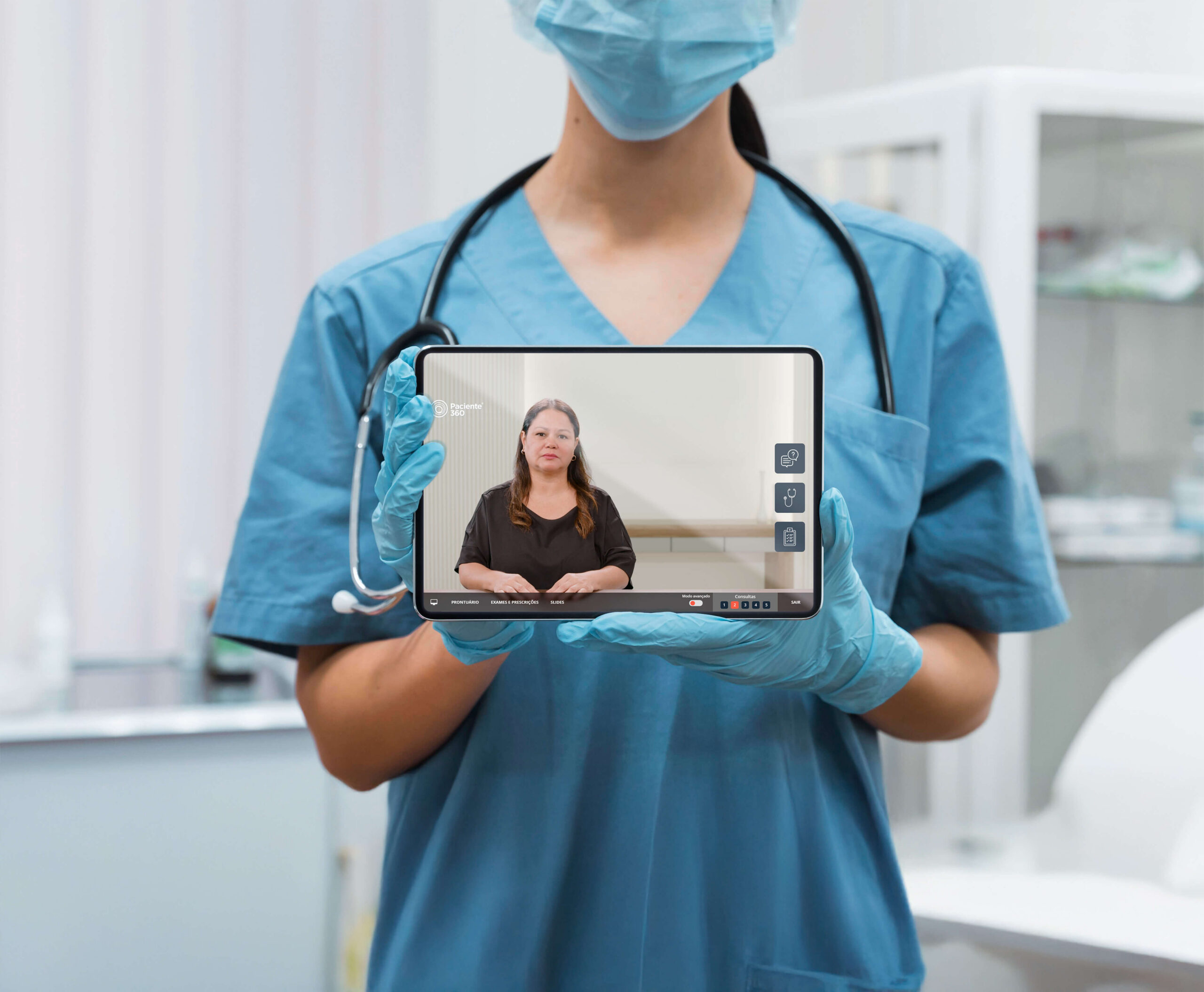
In Paciente 360, the student conducts the consultation as an open conversation and decides the direction with each question. Change the focus and the conversation changes with it. At the end, the reading of the encounter shows how the reasoning moved: where it dug deep and where it accepted the first explanation. It is a safe place to make, notice and correct the error before it happens in front of a real patient.
The goal is not to train students who never err. It is to train students who recognize, in time, when their own reasoning is about to.