Two students, the same case, the same semester. On paper, the clinical history is identical for both. One reaches the diagnosis, the other does not. And most of the time, the difference is not how much each one knows.
Knowing is necessary, but it is not enough. Between the fact and the decision there is a path: how the student opens the conversation, which question comes first, which hypothesis forms early in their mind and whether that hypothesis is ever revisited. Clinical reasoning is the invisible part of the consultation, and it is precisely the part a multiple-choice test cannot see.
A student can memorize the entire protocol and still anchor on the first hypothesis that came to mind. Another may command less content and reason better, because they learned to ask, to listen to what the patient actually answered, and to step back when something does not add up. Reasoning is a skill, and like every skill it is built by doing, not by watching.
The space between theory and the real patient
In the lecture hall, the student watches reasoning happen inside someone else, already finished, already organized. On the ward, on the other hand, it is already the real patient, with real time and the real weight of a first decision. Between those two moments there is a gap, and it is in that gap that the student lacks room to make decisions, to be wrong without it costing anything, and to see where their own thinking slipped.
Filling that space is not about adding more content. It is about adding more repetition of decision. The student who has already conducted dozens of conversations, changed direction in the middle of a history, and revised their own hypothesis arrives at the real patient with a repertoire no lecture conveys on its own.
Where practice comes in
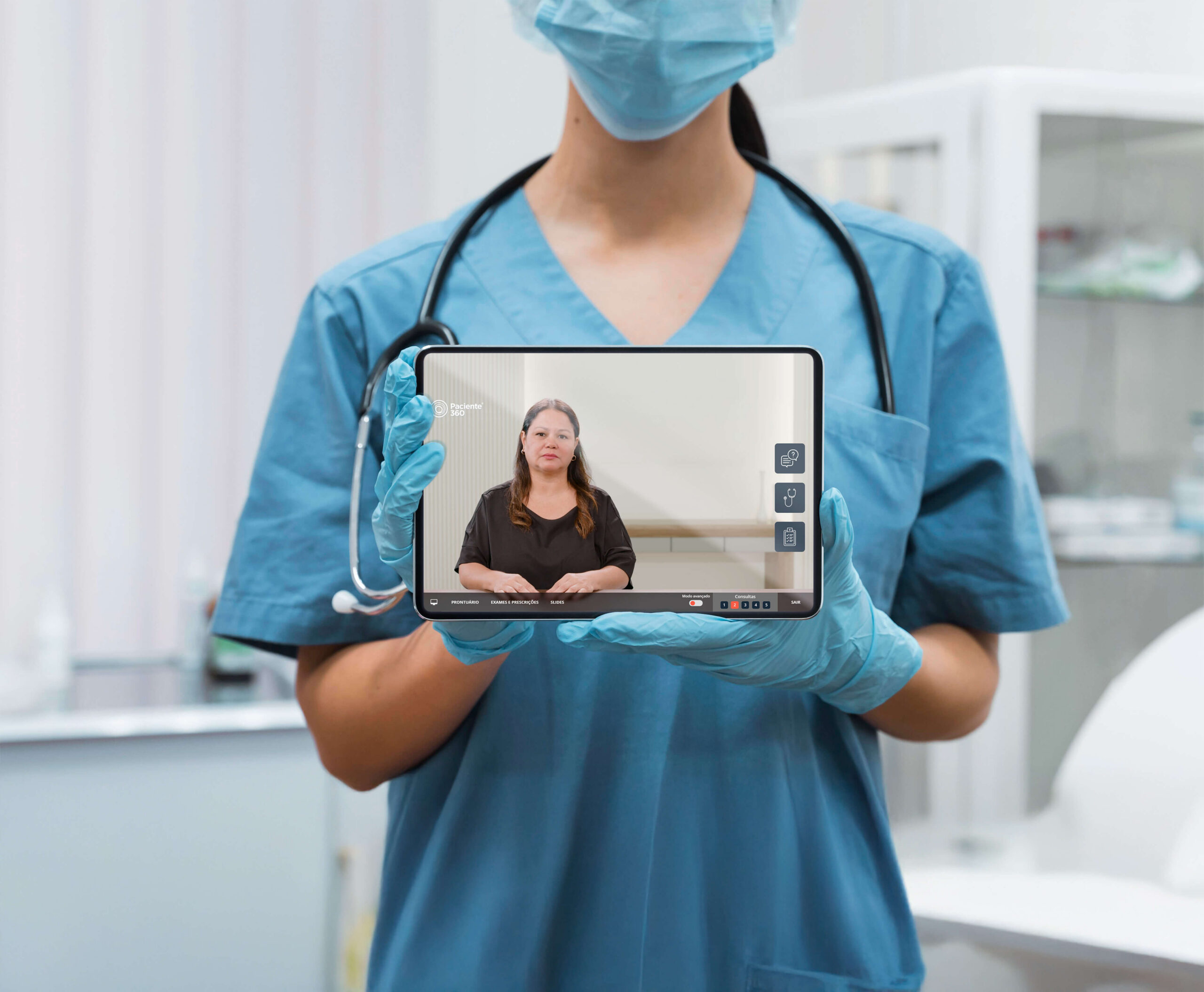
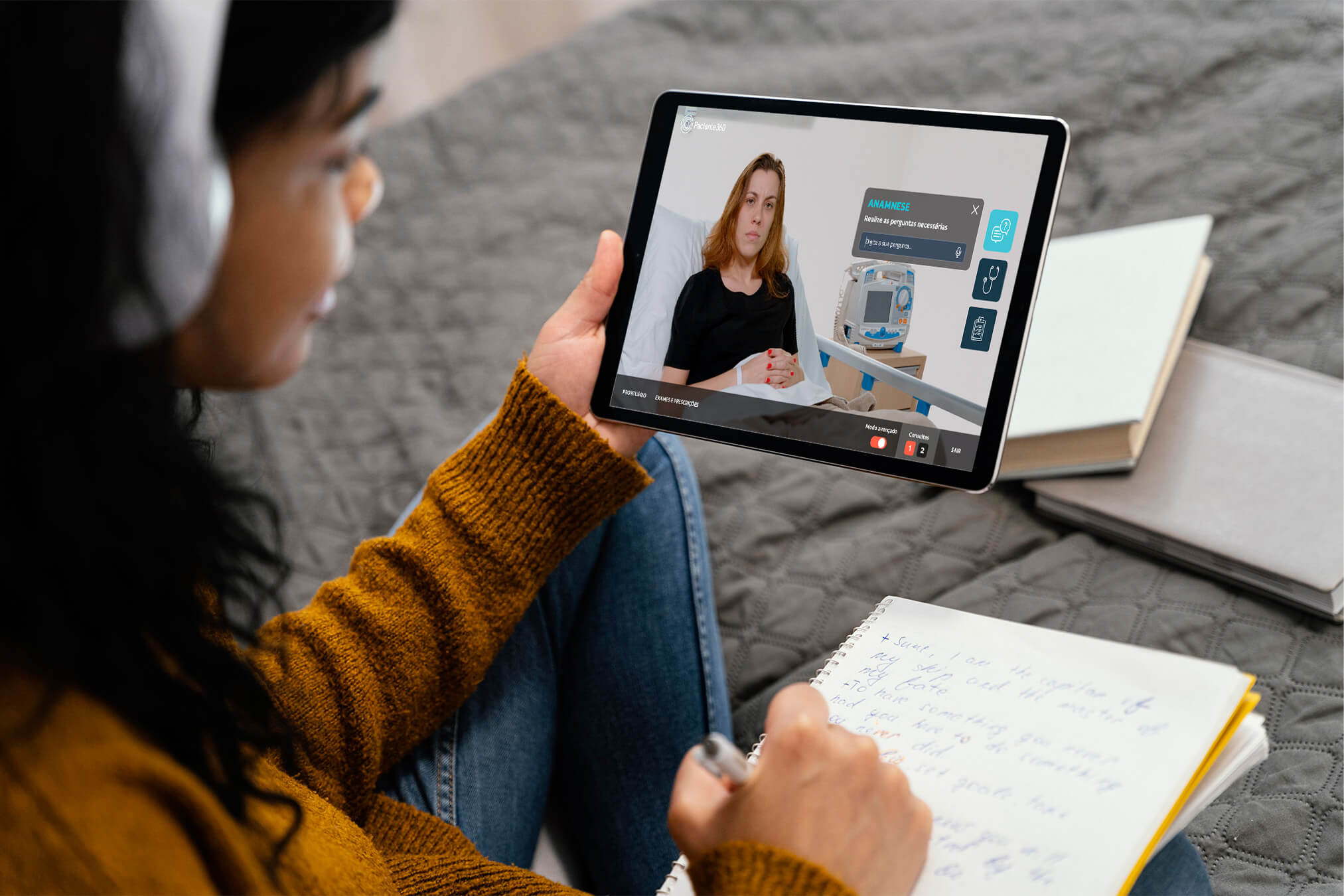
This is where open-ended simulation helps. In Paciente 360, the student conducts the consultation their own way, asks the questions they would ask, and the virtual patient responds as the conversation unfolds. There is no option to tick. When it ends, the student sees how the consultation played out: what they investigated, how they reasoned, how they communicated, and how they reached, or did not reach, the hypothesis.
Two students with the same clinical history will keep reaching different diagnoses. The question worth asking is whether each of them had enough chances to practice the path, not just to memorize the destination.